Day 8 · Utopia: America's religious utopias typically lasted over 50 years. Secular ones lasted 3.
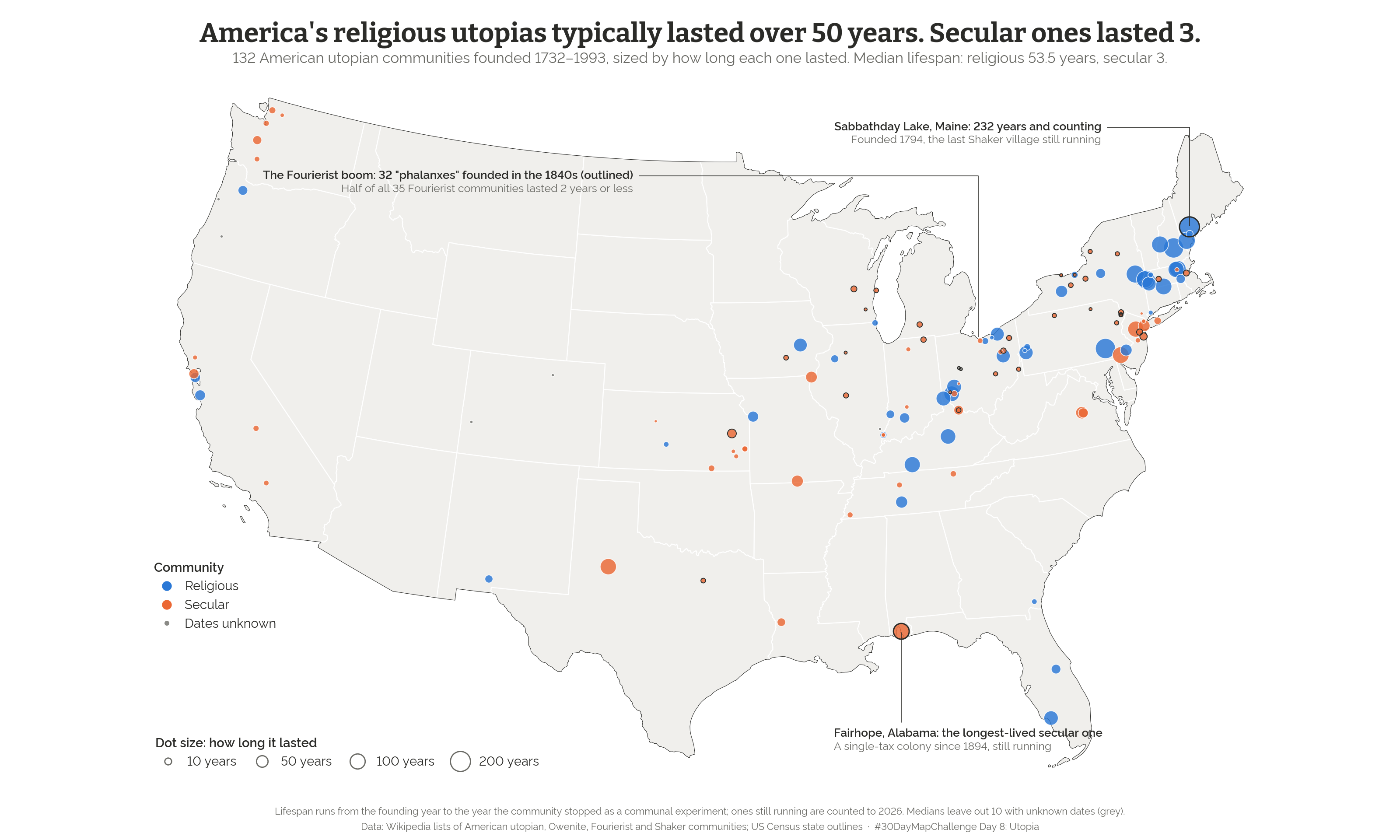
132 American utopian communities, from Shaker villages and the Harmony Society to Fourierist phalanxes and 1970s communes, sized by how long each one lasted. Half the religious ones lasted 53.5 years or more; half the secular ones lasted 3 years or fewer. Switch to the timeline to see each community from founding to end, and hover over any dot or line for its story. Dates come from Wikipedia's lists, and a few religious or secular calls are judgment calls that don't change the result.
Day 9 · Urban-rural: In New York City, 55% of households have no car. In the rest of the state, just 9% do.
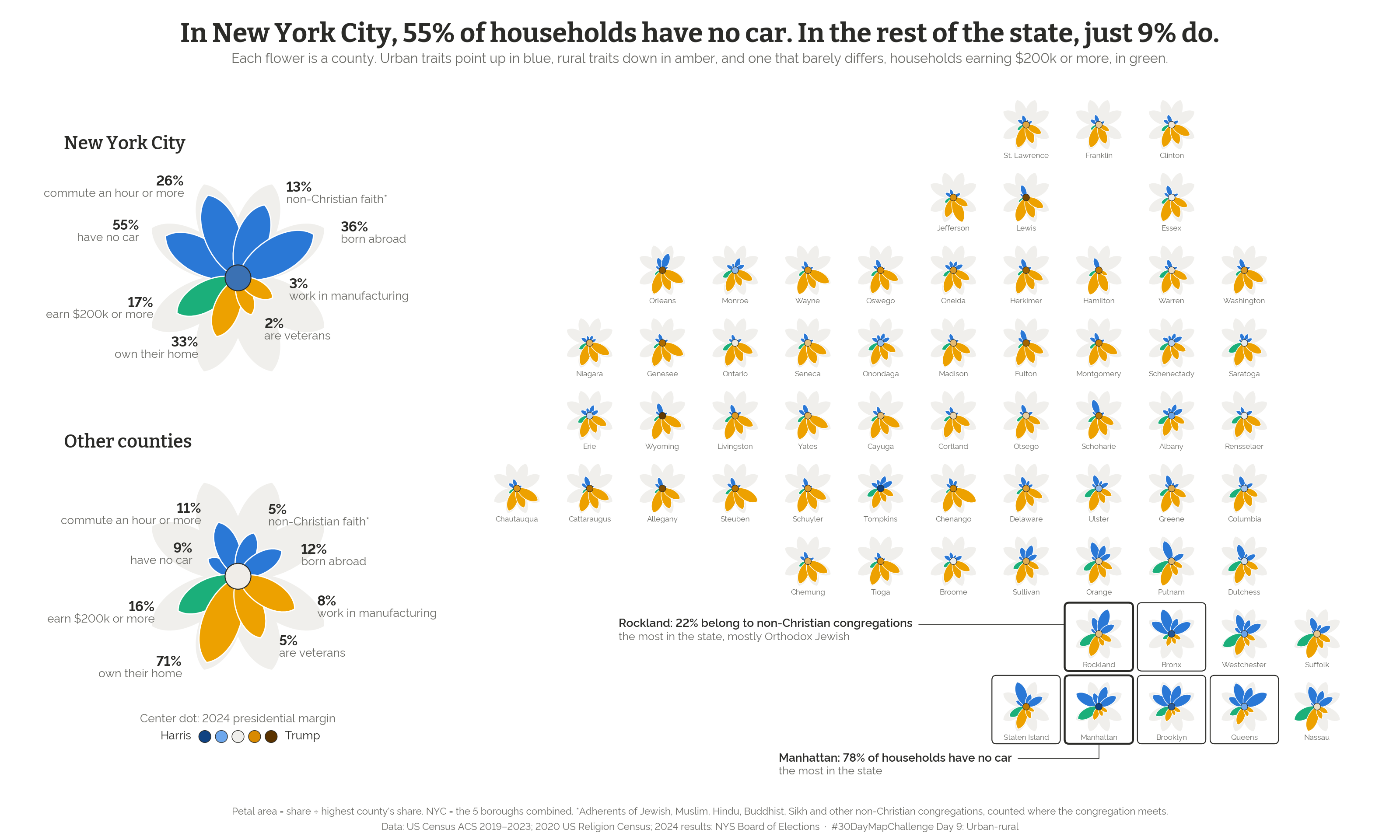
What makes a place urban or rural beyond how many people live there? Each of New York's 62 counties is a flower: urban traits (no car, hour-plus commutes, non-Christian faith, born abroad) point up in blue, rural traits (owning your home, veterans, manufacturing jobs) point down in amber, a green petal shows $200k+ household incomes (about the same everywhere: 17% in NYC, 16% elsewhere), and the center dot shows the 2024 presidential margin. The five boroughs are blue fans; upstate counties hang like bells. Hover a petal on the big New York City or Other counties flower to compare that trait across the state.
Day 10 · Prompting only: How well does Claude know where places are?
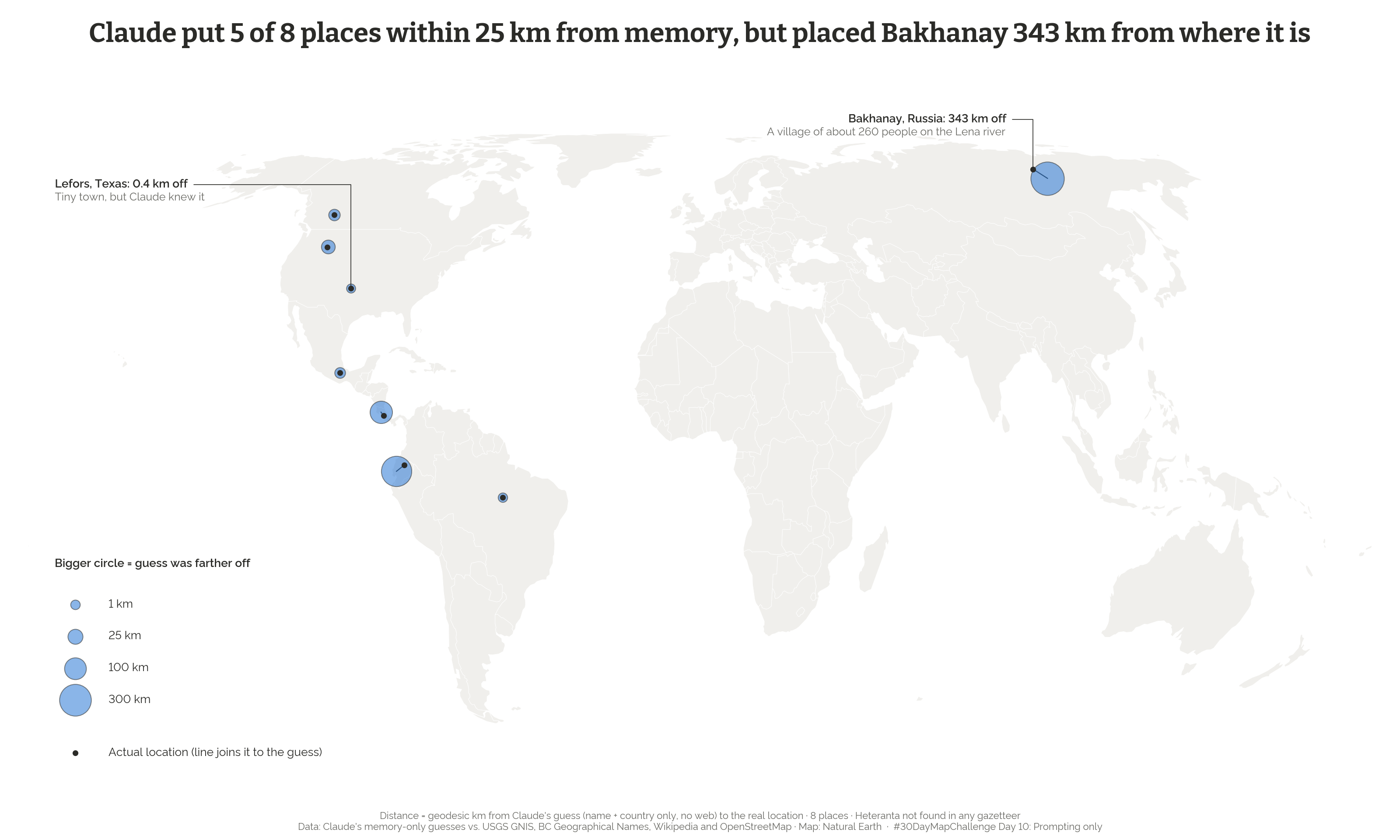
Ask Claude where any place is, with no web or tools, and see how far its memory lands from the real coordinates. Each circle is Claude's guess, sized by how far off it was, joined by a line to the actual location. Claude put most of the first places within 25 km from memory but missed a Siberian village by 343 km. Guesses come from Claude from memory alone; real locations come from USGS, Wikipedia and OpenStreetMap.
Day 11 · Senses: Sound: Loud music tops noise complaints in 55 of 59 NYC districts. What else they hear sets them apart
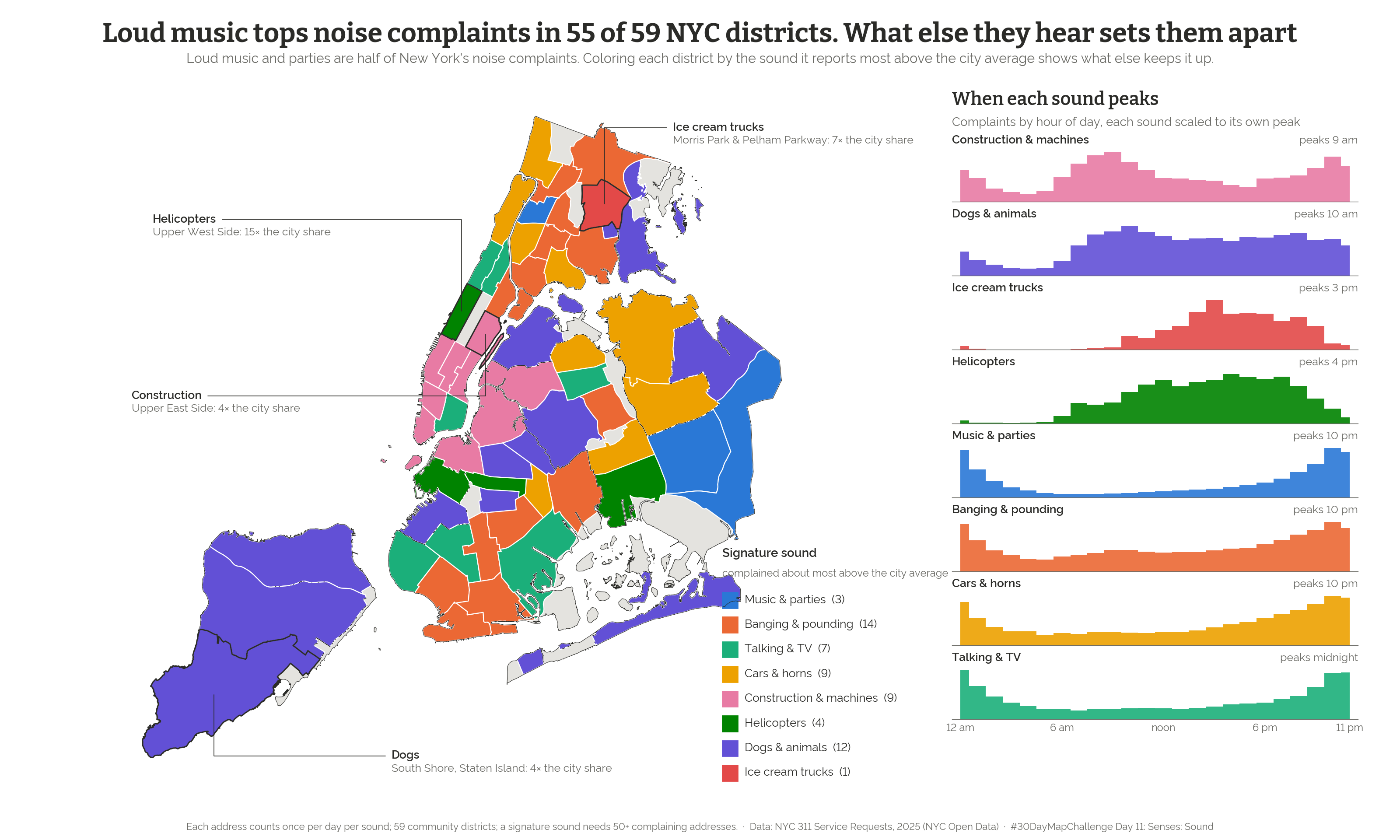
Every 2025 noise complaint to 311, grouped into eight sounds and replayed as one day you can listen to. Each community district is colored by its signature sound, the one it complains about most compared with the city: helicopters on the Upper West Side (15x the city share), dogs on Staten Island, construction in Manhattan, an ice cream truck jingle in Morris Park. Hover a neighborhood to hear only its mix, weighted by that index and by the hour: jackhammers at 9am, helicopters at 4pm, bass and banging at 11pm. Each address counts once per day per sound, so one Bronx building's 115,000 complaints don't drown out everyone else.
Day 12 · Power: About 1,700 buildings stand today in the path of Robert Moses's unbuilt expressways
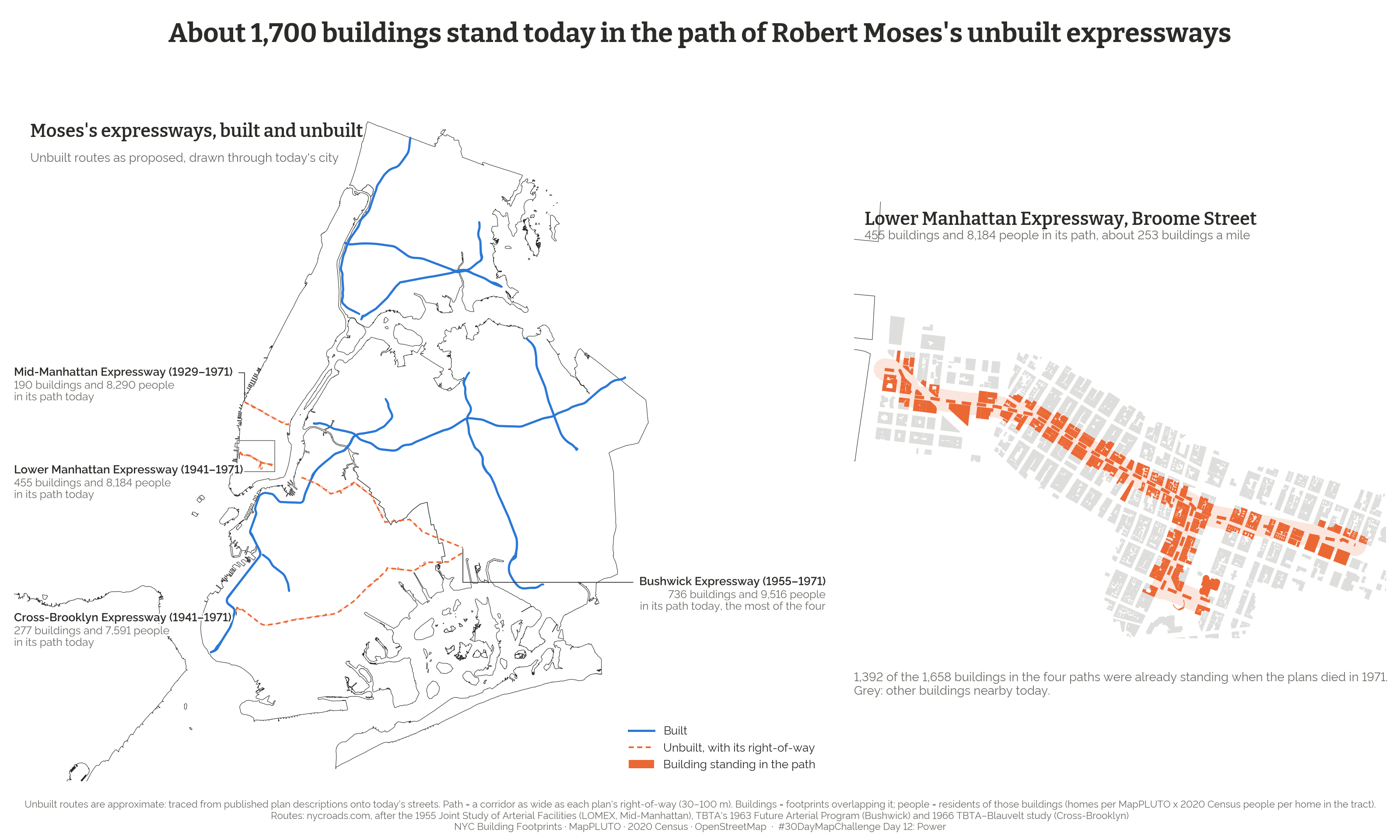
Whose utopia? Robert Moses drew one man's perfect city of expressways through other people's neighborhoods. Many were built, like the Cross Bronx and the BQE. Four never were: the Lower Manhattan, Mid-Manhattan, Bushwick and Cross-Brooklyn expressways. This map traces those routes through today's city, as wide as each plan's right-of-way, and counts the buildings and people now standing in their path.
Day 13 · Interactions: Can you draw these countries?
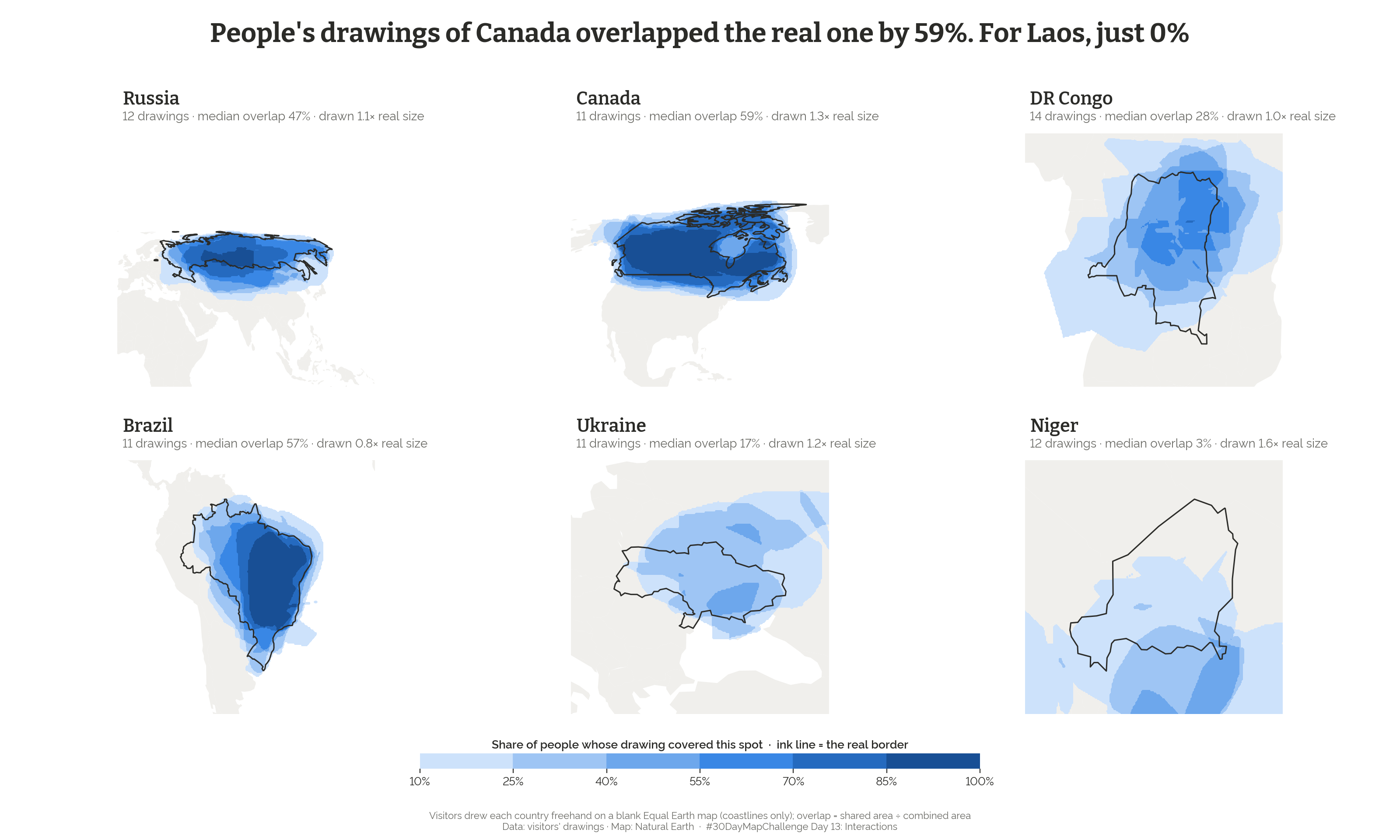
Draw five countries freehand on a blank world map, with coastlines but no borders, and see how your outline compares with the real one: how much it overlaps, how big you drew it, and how far off its center was. After five, see a heat map of everyone's drawings. Areas are compared on an equal-area map. Map data: Natural Earth.
Day 14 · Borgesian map: On the map, but not in the world
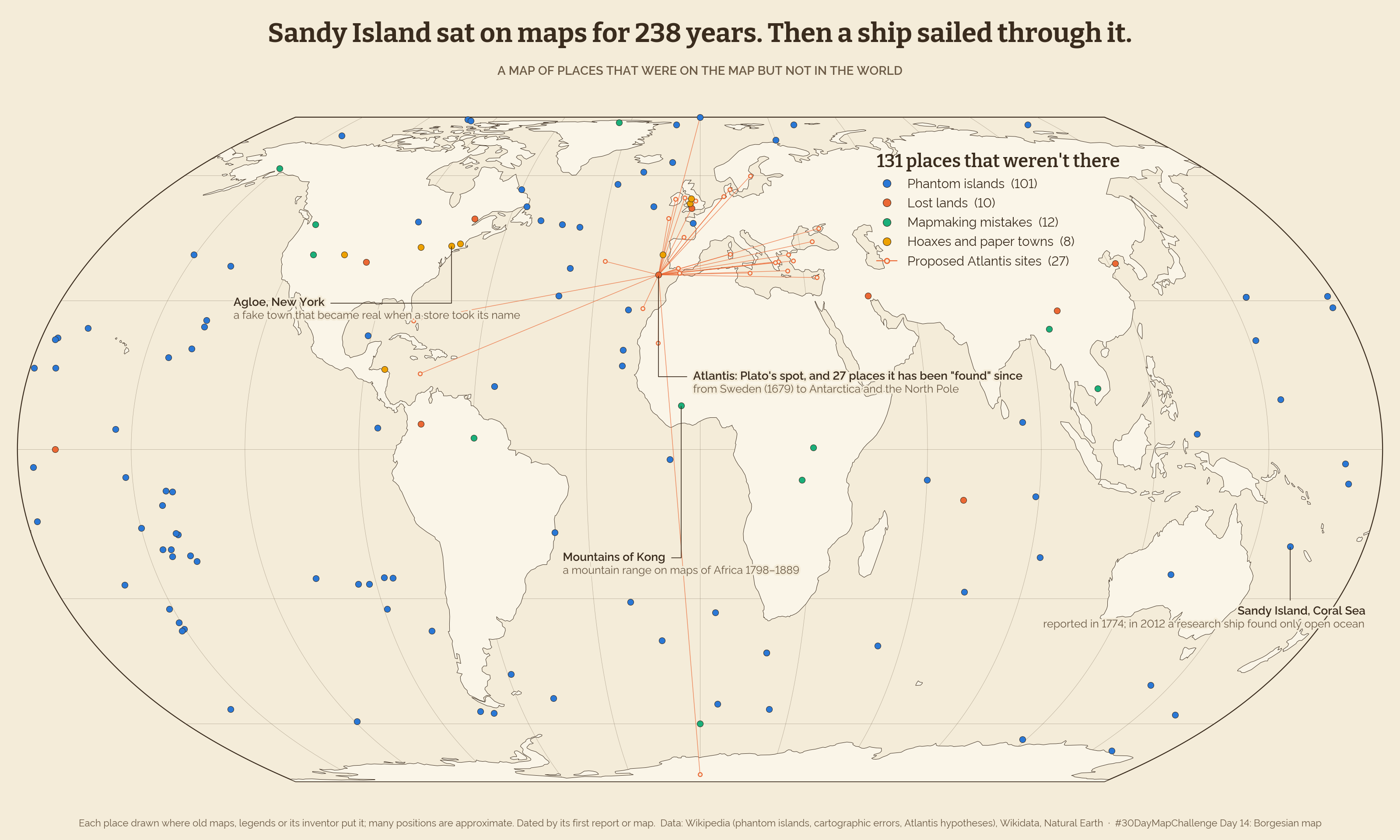
Phantom islands, lost lands, mapmaking mistakes and paper towns: 131 places that appeared on maps or in legends but never existed, drawn where the maps put them, with a timeline of when each first appeared and the 27 places people have said Atlantis really was. Many positions are approximate. Data: Wikipedia, Wikidata, Natural Earth.
All maps: daniellecarrick.github.io/30-day-map-challenge · Code: GitHub · Prompts: 30daymapchallenge.com
#30DayMapChallenge